Carved signs and lettering, Port Stephens
Letters cut into timber, not stuck on it. Carved signs last because the lettering is part of the board — paint wears, vinyl peels, a carved letter is still there.
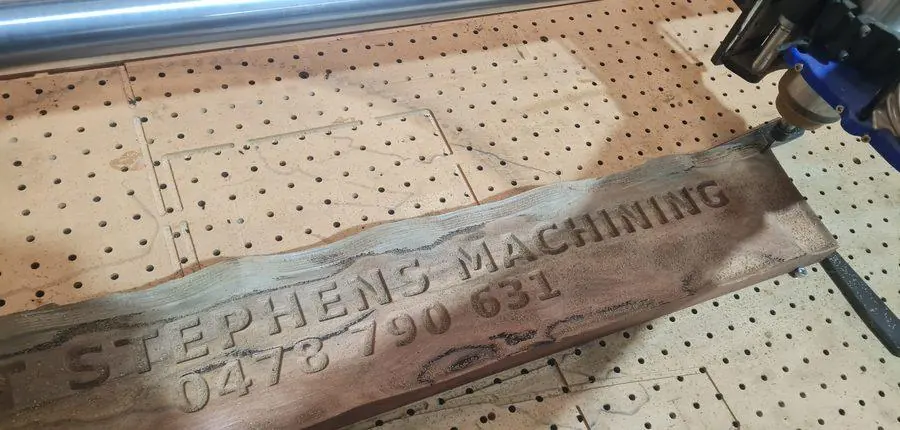
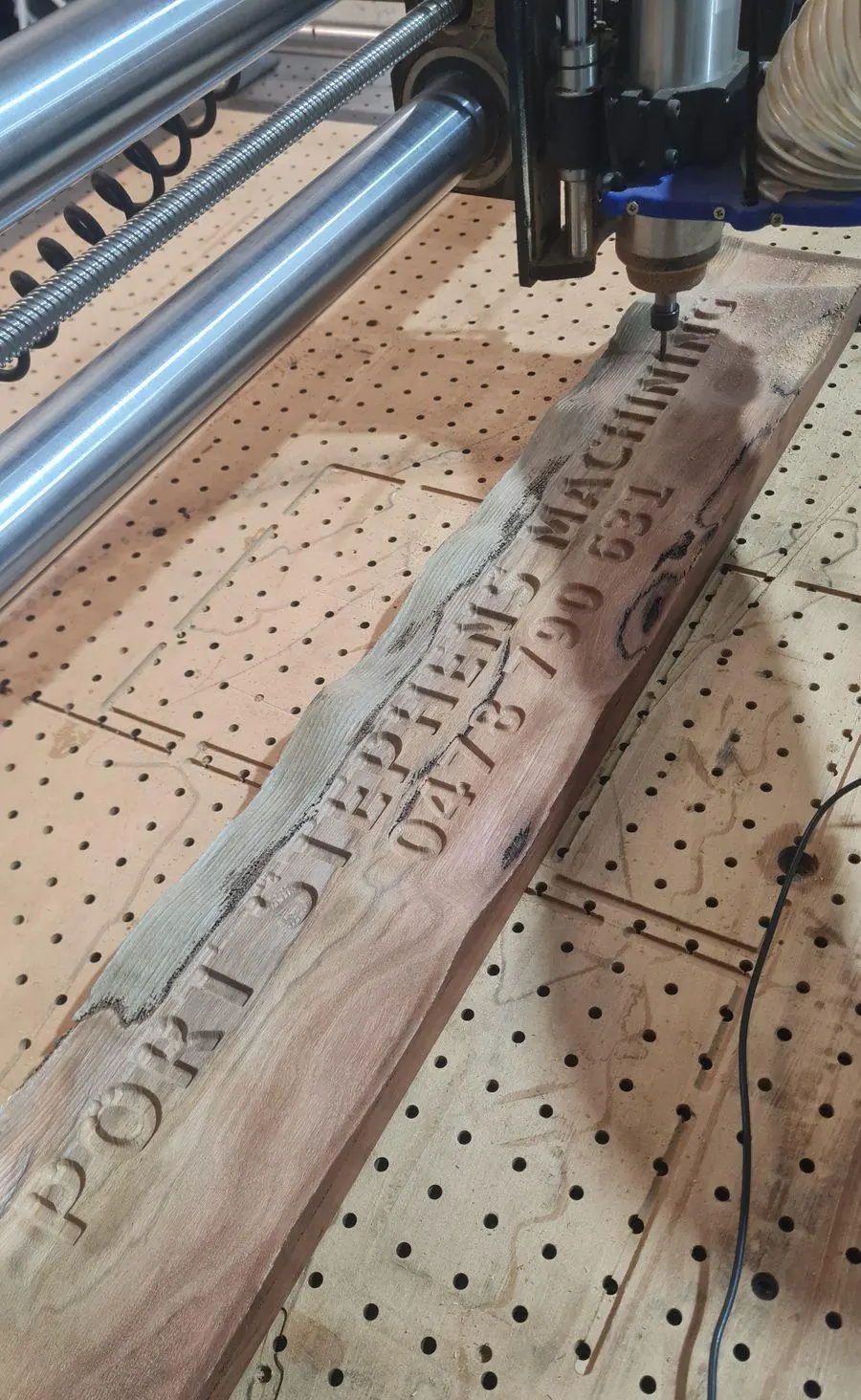
We carve signs on the CNC router at Salamander Bay. House signs, shop and business signs, shed and bar signs, name plates, gates and entry signs, market and stall signs.
What we carve
- House and property signs — name, number, or both, in hardwood or treated pine
- Business and shop signs — logo and wording carved together, indoor or under an awning
- Shed, bar and workshop signs — the ones people actually enjoy ordering
- Name plates and desk signs — small, quick, and a good first job if you are unsure
- Gate and entry signs — larger boards, deeper lettering, made to be read from the road
- Directional and safety signage — in acrylic or aluminium where timber will not do
Carved, not printed
There are three ways letters go into a board and they do not last the same.
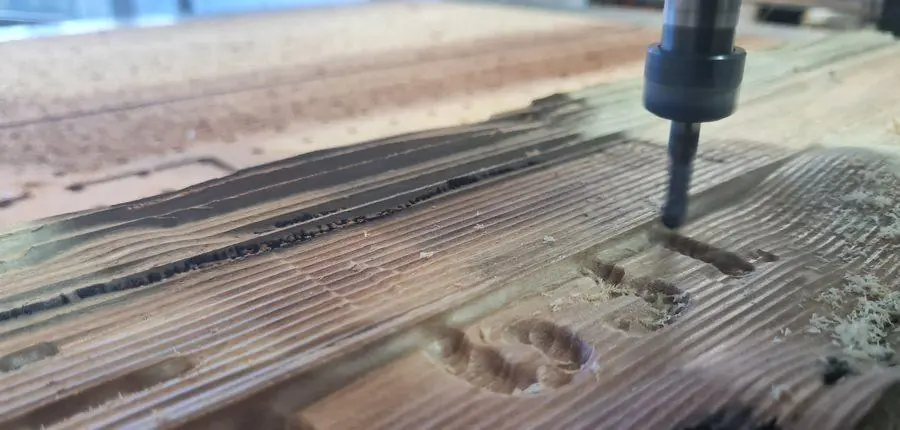
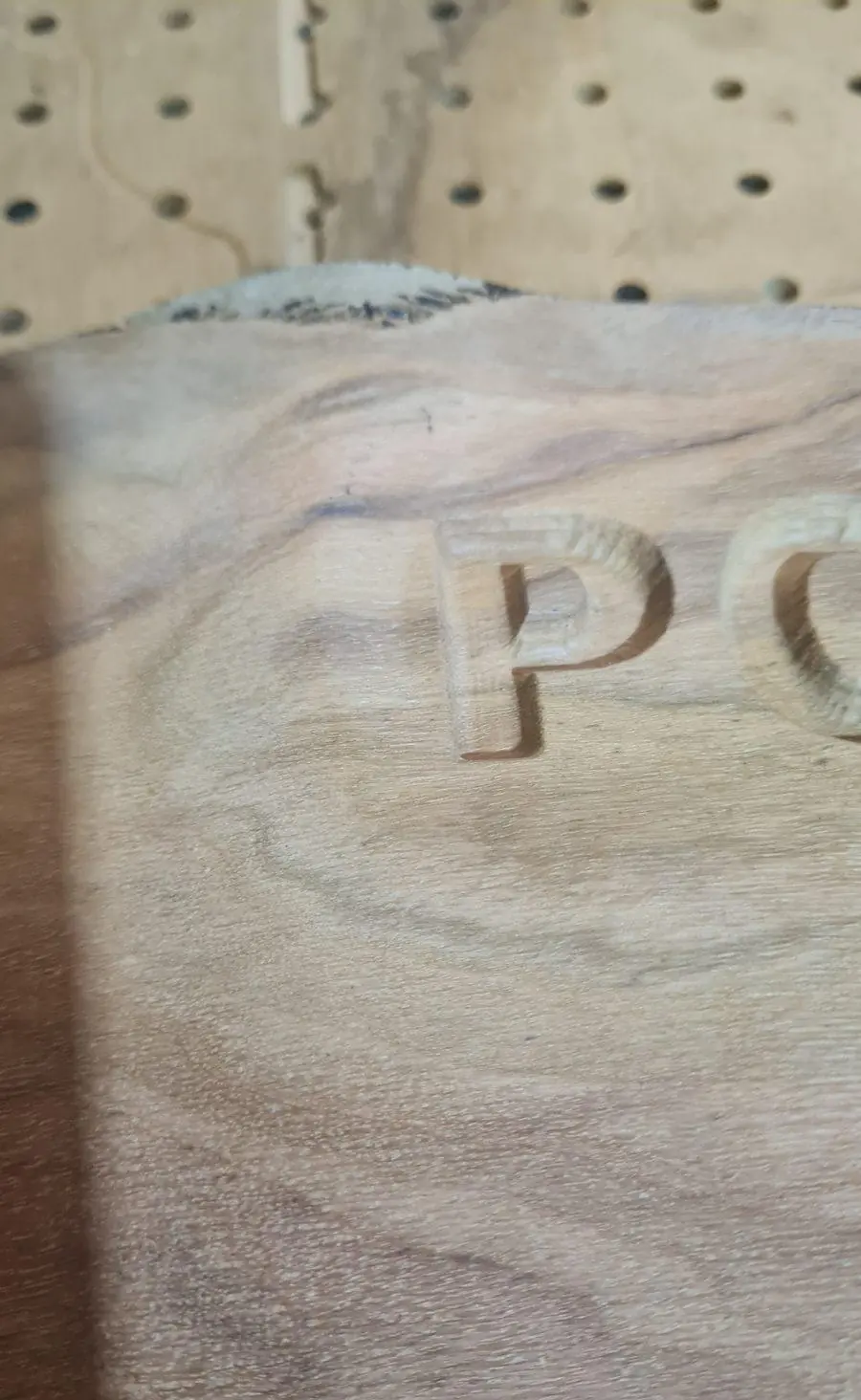
V-carved lettering is cut with a pointed cutter that goes deeper on the wide parts of a letter and shallower on the fine parts. It gives you a crisp edge and a shadow line, and it is the reason a carved sign reads properly from a distance.
Pocketed lettering has a flat bottom at a set depth. It suits a painted fill, because there is a floor for the paint to sit on.
Raised lettering leaves the letters standing proud and clears the background away around them. It costs more machine time because there is more material to remove, and it looks the part on a feature sign.
We will tell you which one suits your sign, your timber and where it is going to hang.
Timber, and what it does outside
Hardwood holds a fine carved edge and stands up to weather. Pine and cedar are cheaper and easier on cutters but the grain is softer, so very fine lettering can crumble at the edges. Ply and MDF are for indoor and painted work only — MDF outside will swell and let go.
A sign facing weather needs sealing or oiling and it needs redoing every so often. Any sign that says otherwise is being sold to you, not explained.
Signs come either way — finished (sanded, oiled or sealed, paint-filled lettering if you want it) or raw off the machine for you to finish. Tell us which when you order. Finished signs cost more and look better for longer.
How small the letters can go
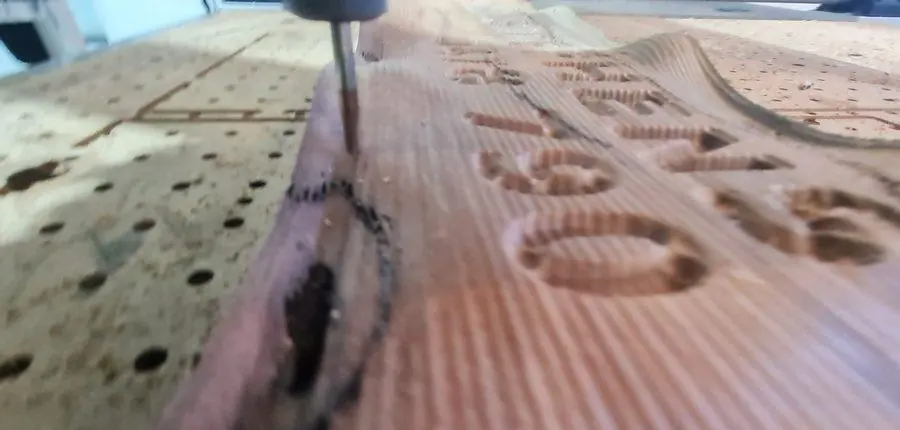
There is a limit, and it is set by the cutter, not the machine. A fine script with hairline strokes hits a point where the cutter physically cannot get into the corner, and you end up with a rounded blob instead of a sharp serif. We check that in the model before we cut, and if your lettering is too fine for the size of board you want, we will tell you and show you what it will actually look like.
That check is part of every job here. The program is simulated and gouge-checked before it runs, so the first time anyone sees a problem it is on the screen and not on your timber.
Bring your own artwork
Send a logo, a photo of an old sign, a font name, or a hand-drawn layout. It gets redrawn in Fusion 360 here — no outside draftsman. If your logo is a low-resolution image off a website, say so; it will need retracing and that is a normal part of the job.
Related router work
Bigger, more detailed carving goes into 3D relief panels. Smaller one-off pieces — house numbers, gifts — are on the plaques and house numbers page. Everything on the router starts at the CNC routing hub.
Send us your wording. Type out exactly what you want it to say, tell us roughly how big and what timber, and send any logo you have. We will lay it out and show you before anything gets cut. Ring 0478 790 631 · Mon–Fri · 12 George Road, Salamander Bay. Or use the quote form.