Shop Talk: Machinist Slang, Translated
Thou, skerrick, swarf and the long weight. What we’re actually saying when we talk about your job.
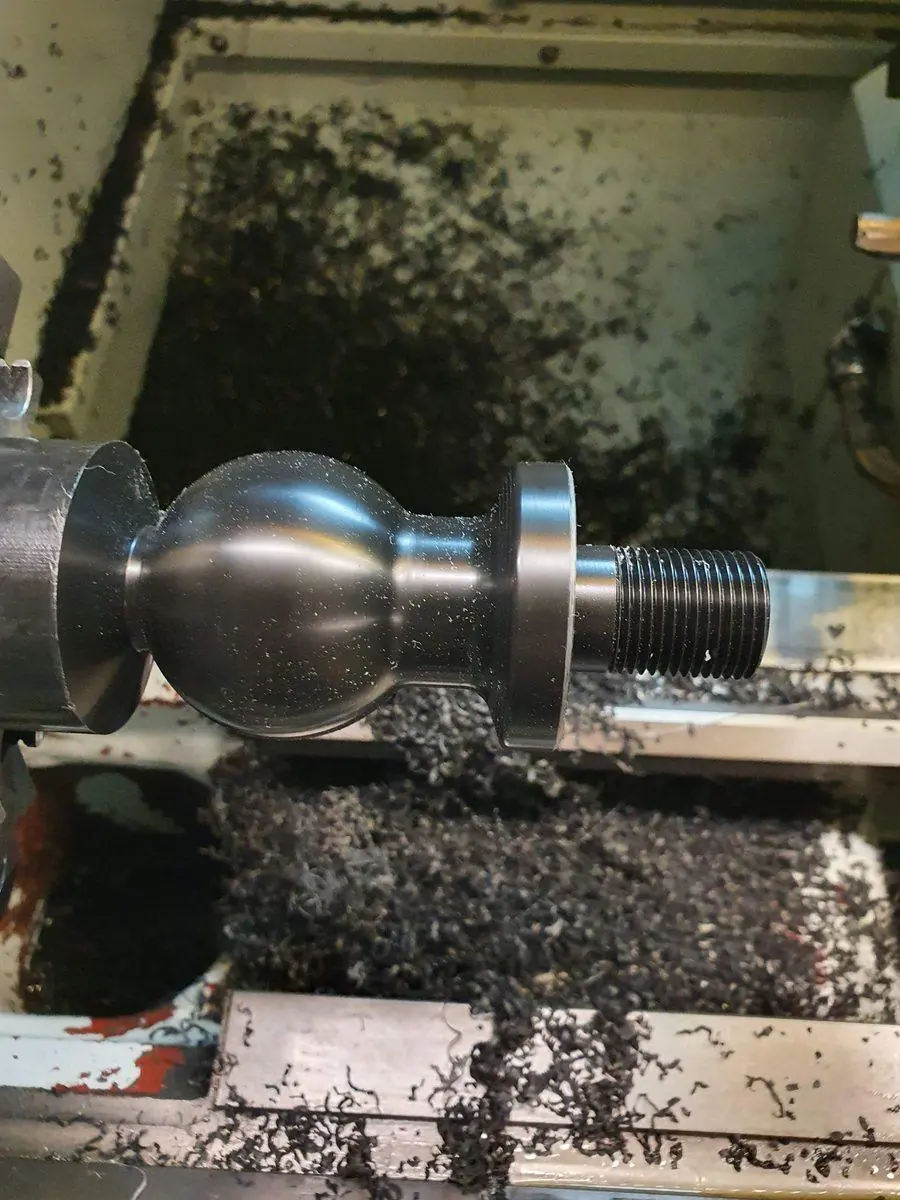
Walk into any Australian machine shop and you’ll hear a language of its own. Here are 217 terms from the floor, translated. Some are useful, some are jokes, and a few are wind-ups every apprentice falls for once.
Nothing found. If you’ve heard one we haven’t, tell us when you call.
US and UK mark American and British terms. The rest is home-grown. Need the serious numbers instead? See our design guide.
Size and accuracy
How close is close enough, in the words of the people holding the micrometer.
- Thou, half a thou
- 0.001 in = 0.0254 mm. Old hands still say it in a metric shop.
- A tenthUS
- 0.0001 in = 0.00254 mm, about 2.5 µm.
- A hundredth, a couple of hundredths
- 0.01 mm, the metric shop's everyday unit.
- A micron
- 0.001 mm.
- Dead on, bang on, on the money
- Exactly on size.
- Dead nutsUS
- Exactly on size, nothing to adjust.
- TLAR
- "That looks about right": sized by eye, nothing measured.
- Near enough is good enough
- Said sarcastically about work that isn't.
- Within cooee
- Close, but not a measurement anyone would sign.
- Fat, heavy
- Oversize. "Leave it fat" = leave stock for the finish pass.
- Shy, light, under
- Undersize. "It's a hundredth shy."
- Proud, standing proud
- Sticking up above the surrounding face.
- A gnat's, a gnat's whisker
- A tiny amount.
- A frog hairUS
- A tiny amount.
- A smidge, a skerrick
- A little bit, or none at all ("not a skerrick left").
- Clearance is clearance
- Shop joke: if it goes together, it fits, whatever the gap.
- Bump fit, tap fit
- Goes in with a light tap from a soft hammer.
- Slop, sloppy
- Too much clearance; it rattles.
- Go / no-go
- The two ends of a plug or ring gauge: one must go, one must not.
- Witness mark
- The faint line left where one cut or surface met another; proof they touched.
Machines and tooling
What the gear on the floor actually gets called.
- Bridgy, Bridgeport
- Any knee-type turret mill, whoever made it.
- The Haas, the Mazak, the Taki
- Machines called by maker, not by type.
- Slot drillUK
- Two-flute end mill that plunges straight down.
- Ripper, corncob, hog
- Roughing end mill with serrated flutes.
- Bull nose
- End mill with a corner radius.
- Fly cutter
- Single-point cutter for facing on a manual mill.
- Tip
- Carbide insert. "Turn the tip" = index to a fresh edge.
- Jobber, stubby
- Standard-length drill; short drill.
- Gun tap
- Spiral-point tap that pushes the chip ahead of it.
- Clock, DTI
- Dial or test indicator.
- Verniers
- Any caliper, dial or digital included.
- Mic, mike
- Micrometer; "mike it" = measure it with one.
- Slips, Jo blocksUS
- Gauge blocks.
- 1-2-3 blocks
- Hardened blocks 1 x 2 x 3 in, used as parallels and squares.
- Wiggler, edge finder
- Tool for picking up an edge on a manual mill.
- Pull stud
- Retention knob on a CAT or BT holder.
- Tombstone
- Upright fixture block on a horizontal mill.
- Dog
- Drives work between centres; also a clamp on a fixture table.
- Shifter
- Adjustable spanner.
- Persuader
- A hammer.
Setups and workholding
Getting the part held, trued and zeroed before a chip is cut.
- Clock it in, clock it up
- Run an indicator over the part or vice and true it.
- Tram the head
- Square a mill head to the table.
- Pick up, touch off, zero
- Set a work offset or a tool length.
- Square it up
- Mill all six faces flat and square.
- Chuck it up
- Hold it in the lathe chuck.
- Skim the jaws
- Take a light cut on soft jaws so they run true.
- Soft jaws
- Aluminium or steel jaws cut to suit the part.
- Stick-out
- How far the tool or part hangs out of its holder.
- Skin of its teeth
- Barely held; a few millimetres of grip.
- First off
- First part of a run, checked before the rest are made.
- Prove out, dry run, air cut
- Run the program slowly or above the part to check it.
- Single block
- Step through the program one line at a time.
- Wind it back
- Turn the feed or speed override down.
- Feed hold
- Stop the axes without killing the spindle.
- Babysit
- Stand at the machine for the whole cycle because you don't trust it.
- Second op, flip it
- Turn the part over for the other side.
Cutting and chips
What you hear while the spindle is turning.
- Swarf
- Chips. Americans just say chips.
- Bird's nest
- Long stringy swarf wrapped round the part, tool or chuck.
- Stringers, tinsel
- Long unbroken chips from a chipbreaker that isn't working.
- Blue chips
- Steel chips coming off hot; fine on carbide, trouble on HSS.
- Chatter, singing
- Vibration that leaves a wavy finish and a howl.
- Rubbing
- Edge not biting because the feed is too light; work-hardens stainless.
- Dig in
- Tool grabs and pulls itself into the cut.
- Hog it out
- Heavy roughing; take the bulk off fast.
- Skim, skim cut
- A light pass to clean up.
- Spring pass
- Repeat the finish pass at the same size to take out tool deflection.
- Give it some herbs
- Wind up the feed or speed.
- Flogging it
- Running a tool or machine harder than it's meant for.
- Built-up edge
- Work metal welded onto the cutting edge; common in aluminium.
- Record finish
- Visible fine spiral grooves on a turned face.
- Suds
- Soluble-oil coolant.
- Break the edges
- Deburr every sharp corner, about 0.2 to 0.5 mm.
Crashes, scrap and fixes
For when the cut didn’t go to plan.
- Pranged it
- Crashed the machine.
- Ate the vice
- The program cut into the vice or fixture.
- Stuffed, cactus
- Broken past fixing.
- Expensive swarf
- A scrapped part.
- One for the bin
- A scrapped part, said quietly.
- Boat anchor
- Scrap, or a machine nobody wants to fix.
- Bodgy, dodgy
- Poor work or a rough fix.
- BodgeUK
- A rough fix.
- Bush it
- Sleeve an oversize hole back to size.
- Shim it
- Pack it out to make up a gap.
- File to fit, paint to match
- Joke for hand-fitting a part that was made wrong.
- Close enough for government workUS
- Joke for work that just passes.
Shop floor and apprentice wind-ups
Smoko, knock-off, and the long weight every apprentice waits for once.
- Smoko
- Morning or afternoon break.
- Knock-off
- End of the day.
- Leading hand
- Senior tradesperson running the floor or a shift.
- Fitter and turner, fitter
- Mechanical tradesperson; a turner works the lathe.
- Boily
- Boilermaker: welder-fabricator.
- Sparky
- Electrician.
- Homer, foreigner, government jobUKUS
- A private job made on the boss's machines.
- Long weight
- Apprentice sent to stores for a "long wait".
- Sky hook
- Apprentice sent for a hook that hangs from nothing.
- Left-handed spanner
- Apprentice sent for a tool that doesn't exist.
- Tin of striped paint, tartan paint
- Same joke, paint shop version.
- Bucket of steam
- Same joke, for the boiler shop.
- Board stretcher
- Same joke, for parts cut too short.
Sheet metal
Folder, guillo and the rest of the sheet shop.
- Folder, brake
- Press brake. A pan brake or box-and-pan folder is the manual kind.
- Guillo
- Guillotine shear.
- Top tool, bottom tool
- Punch and die.
- The V, 8V
- Die opening; the rule of thumb is a V about 8 times the sheet thickness.
- Gooseneck
- Swan-neck punch that clears a return flange.
- Fingers
- The backgauge stops.
- Air bend, bottoming, coining
- Bending in the air, pressing to the die, or squeezing past it to set the angle.
- Springback, overbend it
- The sheet opens up after the punch lifts, so bend past the angle.
- Blank, flat, flat pattern
- The cut shape before folding. Stretch-out [US] is its length.
- K-factor
- Where the neutral line sits in the thickness; sets the flat length.
- Bend deduction
- What comes off the sum of the outside sizes to get the flat.
- Return, lip
- A short flange folded back from a main one.
- Hem
- Edge folded flat back on itself.
- Joggle
- Two close bends that step a flange sideways by about one thickness.
- Bump bend
- Lots of small bends in a row to make a large radius.
- Relief
- Small cut at a bend end or corner so it folds without tearing.
- Won't clear
- The part hits the punch or the machine on a later bend.
- Tab and slot
- Parts that locate in each other's cut-outs before welding.
- Micro-joints, nicks
- Tiny uncut bridges that hold laser parts in the sheet.
- Nest
- Parts laid out on a sheet for cutting.
- Kerf
- Width of material the cut removes.
- Burr side, burr up
- The rough side of a punched or sheared edge.
- Gauge
- Sheet thickness by number; 18 gauge is about 1.2 mm steel.
- Oil-canning
- A flat panel that pops in and out when pushed.
- PEM, clinch nut
- Press-in nut for thin sheet.
- Rivnut, nutsert
- Blind threaded insert set like a pop rivet.
- Colorbond, Zincalume
- Painted and coated steel sheet.
- Checker plate, tread plate
- Plate with a raised non-slip pattern.
Welding and fab
From the boily’s side of the shed.
- MIG, TIG, stick
- Wire-fed, tungsten and rod welding. Stick is MMA.
- Gasless
- Flux-cored MIG wire that needs no gas bottle.
- Rods
- Stick electrodes; "low hy" = low-hydrogen rods.
- Earth
- The work clamp. Americans call it the ground.
- Lid, hood
- Welding helmet.
- Flash, arc eye
- Burnt eyes from looking at the arc.
- Tack, spot it
- Small weld to hold parts in place before welding out.
- Weld it out
- Run the full welds after tacking.
- Stitch weld
- Short welds with gaps between.
- Fit-up
- How well the parts sit together before welding.
- Prep
- Bevels and lands ground on the edges before welding.
- Root, hot pass, fill, cap
- The runs of a multi-pass weld, first to last.
- Lay a bead
- Run a weld.
- Puddle, pool
- The molten metal under the arc.
- Walk the cup
- TIG method of rocking the ceramic cup along the joint.
- Dip the tungsten
- Touch the tungsten into the pool; stop and regrind it.
- Sugar, sugared
- Crusty oxidised back of a stainless weld done without a back purge.
- Back purge
- Gas on the back of the joint so the root stays clean.
- Heat tint, rainbow
- Colours beside a stainless weld; the darker, the hotter it ran.
- Pulled, it's moved
- Weld shrinkage has distorted the job.
- Blew a hole
- Burnt through thin material.
- Undercut
- Groove melted beside the weld and left unfilled.
- Pinholes, worm holes
- Gas porosity in the weld.
- Cold lap
- Weld sitting on the plate without fusing into it.
- Chip the slag
- Knock the flux crust off a stick or flux-core weld.
- Stack of dimesUS
- Even, rippled TIG bead.
- Grinder and paint
- Joke: the grinder and paint make a poor welder look good.
- Gas axe, oxy
- Oxy-acetylene cutting torch.
- Hot spanner
- Oxy torch used to free a seized nut.
- Zip disc, zippy
- Thin cut-off wheel for an angle grinder.
- Broach
- Annular cutter in a mag drill.
- RHS, SHS, CHS
- Rectangular, square and circular hollow section.
- Gal
- Galvanised steel.
- Dross
- Slag stuck to the bottom edge of a plasma or laser cut.
Fitting
Bench work, bearings, and the art of the nip-up.
- Bench work
- Hand work at the vice: marking out, filing, fitting, assembly.
- Mark it out
- Scribe the shape and hole centres onto the job.
- Pop it
- Centre-punch a hole position.
- Blue, blue it up
- Engineer's blue smeared on to show where two faces touch.
- Scrape, flake
- Hand-scraping slideways flat, leaving the half-moon pattern.
- Lap it
- Rub two parts with fine compound until they seat.
- Ease it
- Take a touch off so it fits.
- Draw file
- Push a file sideways along the work for a flat, fine finish.
- Cook it
- Heat a bearing or gear so it drops on the shaft.
- Freeze it
- Chill a shaft or bush in dry ice or liquid nitrogen so it slides in.
- Knock it out, drift it
- Drive a pin, bearing or shaft out with a drift.
- Puller
- Bearing or gear puller.
- Run-out
- Wobble on a turning part, read on a clock as TIR.
- End float
- Axial play in a shaft or bearing.
- Backlash
- Play between gear teeth or in a leadscrew nut.
- Seized, frozen
- Stuck solid.
- Galled
- Surfaces welded and torn by rubbing; stainless threads are famous for it.
- Nip it up
- Tighten lightly.
- Gutentight
- Tightened by feel; nobody used a torque wrench.
- Rattle gun
- Impact wrench.
- Grub screw
- Headless screw. Americans call it a set screw.
- Set, set screw
- In Australia, a bolt threaded right up to the head.
- Cap head, Allen bolt
- Socket head cap screw.
- Half-moon key
- Woodruff key.
- Chase the thread
- Run a tap or die through to clean up a damaged thread.
- Helicoil it
- Repair a stripped thread with a coil insert.
- Easy-out
- Screw extractor for a broken bolt.
- Loctite it
- Use thread-locker.
- Copper grease
- Anti-seize compound.
CAD and CAM
From the screen to the G-code.
- The drawing, printUS
- The dimensioned 2D sheet. Old hands still say blueprint.
- The model
- The 3D CAD solid.
- Dumb solid
- Imported STEP or IGES with no feature history to edit.
- Fully constrained, it's gone black
- Sketch with nothing left free to move; Fusion turns it black.
- Blue lines
- Under-constrained sketch geometry that can still drift.
- Timeline, history tree
- The ordered list of features that builds the model.
- Roll it back
- Drag the timeline back to edit an earlier feature.
- Parametric
- Sizes driven by named values, so one change updates the lot.
- Designer special
- A part that can't be made the way it's drawn.
- Tolerance everything
- Drawing with a tight tolerance on every size, needed or not.
- DXF for the laser
- Flat-pattern outline sent to the profile cutter.
- STEP, STP
- Neutral 3D file for swapping models between CAD systems.
- Toolpath
- The cutter's programmed path.
- Adaptive, trochoidal, dynamic
- High-speed roughing with constant tool engagement.
- Stepover, stepdown
- Sideways and depth spacing between passes.
- Rest machining
- A smaller tool cleaning up what the last one couldn't reach.
- Scallop
- Ridge left between ball-nose passes.
- Air cutting
- Toolpath moving through where material has already gone.
- Gouge
- Toolpath cuts into the finished part.
- Sim it, verify
- Run the simulation before the machine.
- Post it
- Run the post processor to turn the toolpath into G-code.
- The code, the program
- The G-code. Old timers still say the tape.
- Hand code
- G-code typed by hand, no CAM.
- Conversational
- Programming at the control with its own menus.
- Canned cycle
- One-line drilling, tapping or boring cycle such as G81 or G83.
- Drip feed, DNC
- Feeding a program too big for the control's memory over a cable.
- Comp, cutter comp
- G41 or G42 so the control offsets for tool radius.
- Rapid into it
- G0 move straight into the part or vice: a crash.
- Work offset, G54
- Where the part zero sits on the machine.
Heard one we haven’t? Or just need a part made, dead on? Ring 0478 790 631 or email [email protected]. Get a quote →